
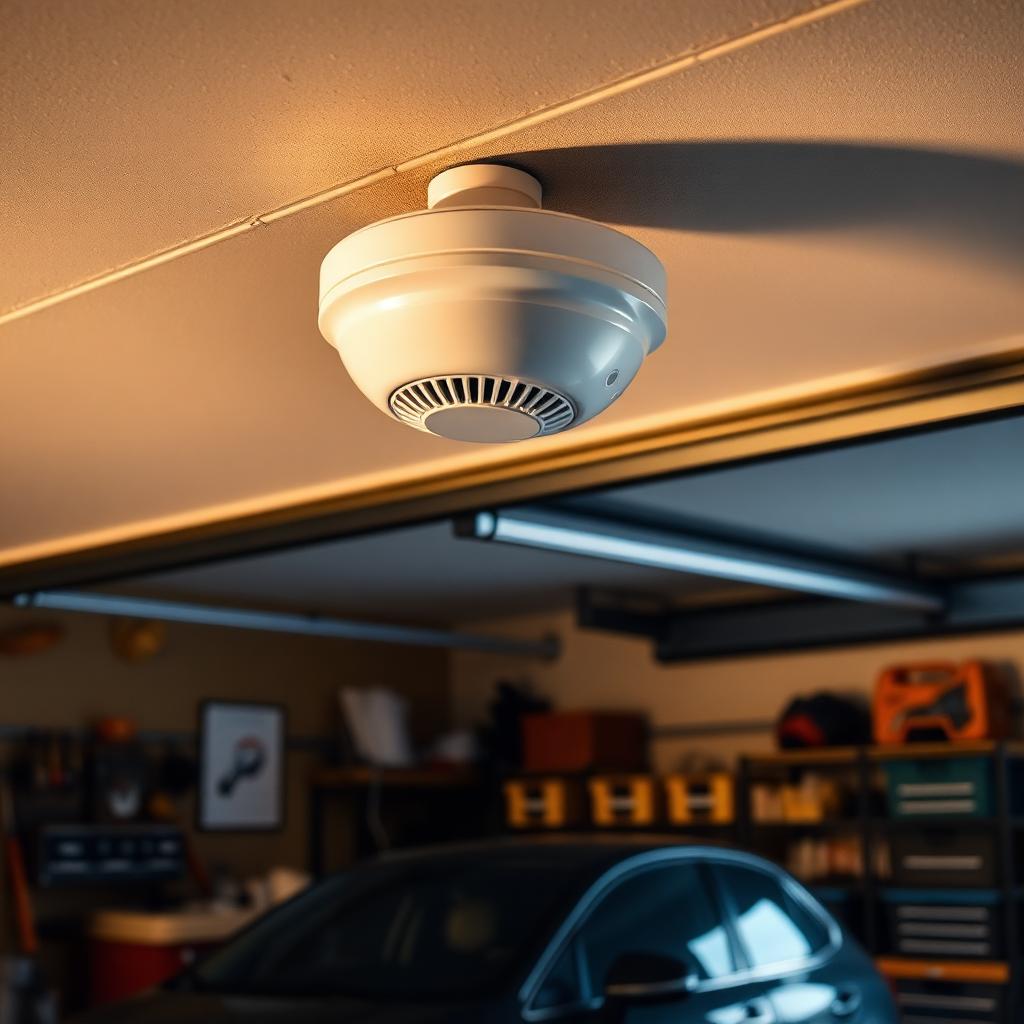
CHARLOTTE, NC – X-Sense highlights the growing need for whole-home protection as fire behavior in modern households becomes increasingly unpredictable.
When people think about home fire safety, smoke alarms are usually the first device that comes to mind. That makes sense. Smoke alarms are an essential part of early warning in bedrooms, hallways, and living areas.
However, not every room in a home creates the same conditions. A garage, kitchen, basement, workshop, or utility room may have dust, fumes, steam, changing temperatures, and other factors that make smoke detection less suitable in certain locations. This is where heat detectors can play a useful role.
Heat detectors are not designed to replace smoke alarms. They are designed to complement them. Instead of detecting smoke particles, they respond when the temperature in an area rises to a dangerous level. In the right place, this can provide an added layer of protection without creating frequent unwanted alarms.
Heat Detection Works Differently From Smoke Detection
Smoke alarms are designed to identify smoke in the air. Heat detectors monitor temperature. When heat reaches a set level, or rises rapidly, the device can sound an alarm.
This distinction matters because smoke often appears before a room reaches a high temperature. A smoke alarm may therefore provide an earlier warning in many parts of the home. That is why smoke alarms remain important in sleeping areas, outside bedrooms, and on each level of the property.
Heat detectors have a different purpose. They are useful in rooms where daily activity may create conditions that interfere with smoke alarms. A garage may contain vehicle fumes, dust, insects, and changing humidity. A kitchen may produce steam or cooking smoke. A workshop may have fine particles from tools or materials.
Using the right device in the right location helps households avoid a common mistake: removing or disabling an alarm because it produces repeated nuisance alerts.
Garages Are a Common Example
Garages can contain several potential fire risks. Vehicles, fuel containers, power tools, chargers, batteries, paint, stored cardboard, and other household materials may all be present. At the same time, garages often experience temperature changes, dust, exhaust fumes, and insects.
These conditions can make smoke alarms less suitable for some garage environments. A heat detector can monitor for a significant rise in temperature without reacting to everyday dust or vehicle-related fumes in the same way.
This does not mean a heat detector should be placed without planning. Homeowners should consider the layout of the garage, likely sources of heat, and the manufacturer’s installation instructions. They should also avoid placing devices where normal heat exposure could cause unnecessary activations.
The same careful approach applies to basements, utility rooms, workshops, and storage spaces. A safety device is most effective when it is selected for the actual conditions in that area.
Heat Detectors Should Support, Not Replace, Smoke Alarms
A heat detector is one part of a broader home safety plan. It should not be used as a substitute for smoke alarm coverage in bedrooms, hallways, and other areas where early smoke detection is important.
A practical home safety setup may include smoke alarms in key living and sleeping areas, carbon monoxide alarms where fuel-burning appliances are present, and heat detectors in spaces such as garages or workshops. The right arrangement will depend on the property and local requirements.
This layered approach is useful because fires do not always begin in the same place. A kitchen fire, electrical fault, garage fire, or basement appliance issue may develop differently. Matching the detection method to the room can help improve the overall response.
Homeowners should also think about whether alarms can be heard throughout the property. In a larger home, a warning from a garage or basement may not be loud enough for someone sleeping upstairs.
Interconnected Alarms Can Extend the Warning
Interconnected systems are designed to solve that issue. When one compatible alarm detects danger, other linked devices can sound at the same time.
This can make a major difference in multi-storey homes, homes with detached work areas, or properties with bedrooms located far from garages and utility spaces. A heat detector may sense a significant temperature rise in one area, while connected smoke or carbon monoxide alarms alert people elsewhere in the home.
X-SENSE develops connected home safety products that can bring different alarm types into one wider system. This can help households build coverage around the actual risks in different rooms rather than relying on one device type everywhere.
A connected system does not remove the need for regular testing or a clear escape plan. It can, however, help ensure that a warning reaches more people when one alarm is triggered.
A Closer Look at the XH02-M Heat Detector
The X-SENSE XH02-M heat detector is designed for areas such as kitchens, basements, and garages. It uses an NTC thermistor sensor and is listed with a heat sensitivity range of 129°F to 149°F, or 54°C to 65°C.
The device can work with the X-Sense SBS50 Base Station for app-based monitoring and interconnected protection. When part of a compatible system, it can help alert other connected devices when heat reaches the alarm threshold.
According to X-Sense product information, the XH02-M has a sealed lithium battery. Its stated battery life is seven years when connected to the base station and up to 10 years when used without that connection. The device also has a stated open-air wireless range of more than 1,700 feet, although real-world range can vary depending on walls, building materials, and layout.
The system can support up to 50 compatible devices through the base station. This may be useful for larger homes or households looking to connect smoke alarms, carbon monoxide alarms, and heat detectors in one network.
Maintenance Still Matters
Like every safety device, a heat detector needs regular attention. Homeowners should test it according to the manufacturer’s guidance and keep it free from dust, paint, and damage.
The installation date should also be recorded. Even devices with long-life batteries have a stated service life and should be replaced when required.
Families should also have a simple emergency plan. Everyone should know what an alarm sounds like, how to leave the home safely, and where to meet outside. Devices provide the warning. A prepared household is better able to act on it.
A Useful Addition to Home Safety
Heat detectors have a specific and practical role. They are not meant to replace smoke alarms, but they can improve protection in rooms where heat detection is more appropriate.
By combining suitable devices, sensible placement, regular testing, and a clear escape plan, homeowners can create a stronger approach to fire safety across the whole property.
About X-SENSE Innovations
Founded in 2013, X-SENSE Innovations operates from its registered U.S. address at X-SENSE USA LLC, 1209 Orange St, Wilmington, DE 19801, and specializes in developing certified home fire and safety solutions for both residential and commercial environments. The company focuses on producing professional and user-friendly safety devices, including domestic fire alarms such as smoke, carbon monoxide, and heat alarms, as well as smart home safety systems covering fire protection, intrusion detection, and indoor environment monitoring.
More information is available at www.x-sense.com.
Official company social media profiles: Facebook and Instagram.
Media Detail
Contact Person Name: Farrukh
Company Name: X-Sense
Email: service@x-sense.com
Website: https://www.x-sense.com/
Phone: +1 (833) 952-1880


