

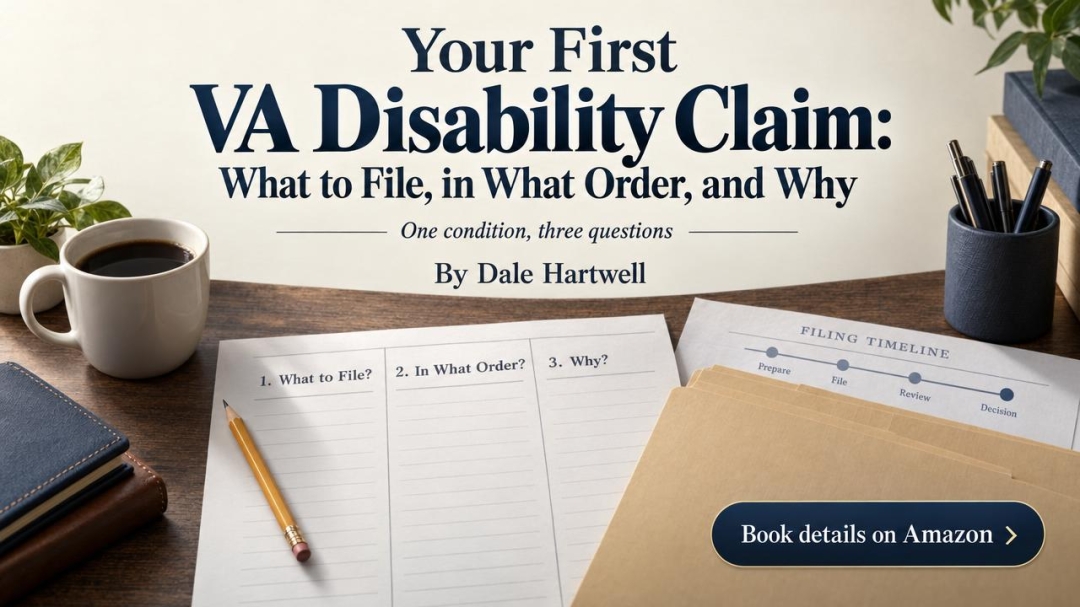
HOUSTON, TX – Nov. 27, 2026 – In Your First VA Disability Claim: What to File, in What Order, and Why, published November 16, 2026, Dale Hartwell introduces first-time claimants to two records that serve different purposes. A VA intent to file tracking sheet preserves dates and confirmations. A separate evidence worksheet helps a veteran examine what is known about a current condition, what happened in service and how the two may be related. A receipt can establish when an application was submitted. It cannot explain why the veteran listed a particular condition on it.
Hartwell illustrates the distinction with an intent to file confirmation. Two details matter immediately: the benefit for which the intent was recorded and the date VA received it. The book recommends entering those details in a timeline alongside later entries for the application, letters and uploads. If a question arises about a submission months later, the veteran can match the confirmation number to the material it covers rather than trying to identify a receipt by its date alone.
The evidence worksheet begins with one condition rather than one transaction. In Chapter 4, Hartwell divides the sheet into three columns. The first concerns the disability as it affects the veteran now. The second concerns an event or circumstances during service. The third concerns the connection between them, sometimes called the nexus. Several recent treatment notes might describe a current problem in detail without saying anything about when it began. Read together, those notes can fill in part of the first column while leaving a question open in the second.
The exercise ends with a decision about what to look for, not a prediction about the claim. The veteran marks each column complete, partial or missing and writes a specific task beside each gap. Hartwell’s example identifies sick-call records from a particular year and clinic as the next request. That degree of detail gives the veteran a way to assess the reply: did the clinic send a record of the visit in question? The number of pages in the envelope does not answer that question.
Can a pharmacy record help me rebuild my timeline? A prescription entry can help place treatment in time when a veteran recalls taking medication but cannot remember exactly when. Hartwell includes pharmacy records among the sources worth considering when conventional medical records are incomplete. An employment physical may document symptoms after discharge, while a letter written during training may describe a difficulty the veteran never reported at sick call. Each source has limits. A date in a pharmacy file, for instance, gives the veteran a documented point to work from; it does not by itself explain what caused the condition.
Precision need not mean supplying details a veteran cannot remember. Chapter 5 makes room for an approximate period, a place or an activity when the exact date or clinic name is unknown. The same principle applies to symptoms. Someone who experiences pain and numbness in one hand can identify the affected hand and describe the sensation without guessing at a diagnosis. Hartwell distinguishes a symptom that needs clinical evaluation from a diagnosis already in the medical record. Both belong in the working notes, but they are not interchangeable.
That distinction carries through to VA Form 21-526EZ. A description such as a leg problem leaves the reader of the application to guess which leg is affected and what the problem is. Where records contain a diagnosis, Hartwell explains how the veteran can use its name and specify the affected side. Where they do not, a plain description can still be precise. The aim is to make the application intelligible without making the evidence sound more certain than it is.
How is a VA examiner different from a VA rater? At a compensation and pension examination, the examiner documents findings about the condition and may provide a medical opinion when asked. The rater decides the claim using the examination report alongside the other evidence in the file. Hartwell uses that distinction to frame preparation for the appointment. Rather than trying to anticipate a rating, the veteran can focus on firsthand observations: what happens on a typical day, what changes on a worse day and which activities become difficult.
The worksheets in Appendix B can be copied or recreated in a notebook or spreadsheet. They need not share a format to work together. A request log can show that a clinic replied; the condition worksheet can show whether its reply documented the event in question; the filing timeline can identify the confirmation for the material ultimately submitted. For a veteran returning to a file after an interval, those entries distinguish a finished administrative task from an unanswered question about the evidence.
Your First VA Disability Claim: What to File, in What Order, and Why is written for veterans preparing their first disability compensation claim. The book directs readers to VA.gov or an accredited representative to confirm current forms and deadlines, and to their own health care providers for individual medical advice. Book details: https://www.amazon.com/dp/B0HRTCFS9K. Additional book information is available through Book website.
About Dale Hartwell
Dale Hartwell is the author of Your First VA Disability Claim: What to File, in What Order, and Why. Hartwell writes for veterans preparing a first disability compensation claim, using worksheets and examples to explain how to describe symptoms, organize supporting records and keep track of material submitted to VA.
Video Link: https://www.youtube.com/embed/DAWNurOzg8M
Media Contact
Company Name: Your First VA Disability Claim
Contact Person: Dale Hartwell
Email: Send Email
Phone: 713-392-6222
Address:450 N Sam Houston Prky E Ste 103
City: Houston
State: TX
Country: United States
Website: https://wjllznpzedhsbg1n6voh9o1x.macaly.app/
Press Release Distributed by ABNewswire.com
To view the original version on ABNewswire visit: Dale Hartwell’s guide separates proof of filing from evidence of disability