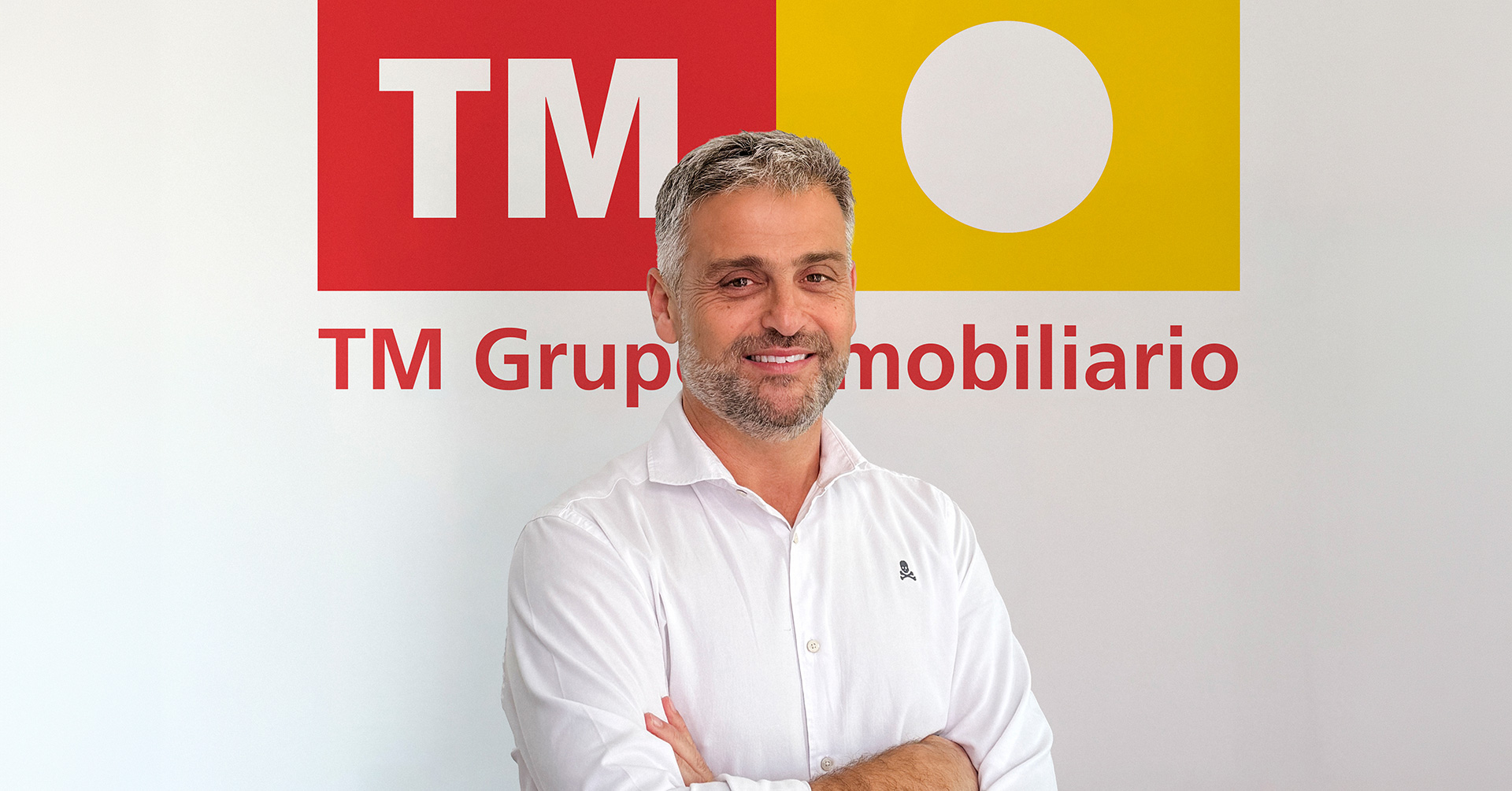
After the Tulum correction, a developer with 57 years of history lays out the signals of a financially sound project.
PLAYA DEL CARMEN, QUINTANA ROO, MEXICO, October 27, 2026 /EINPresswire.com/ — After the Tulum correction and with projects stalled in several cities, a developer with 57 years of history lays out the signals that distinguish a financially sound project from one that depends on the next sale.
PLAYA DEL CARMEN, Quintana Roo, Mexico, October 27, 2026. Every year, thousands of Mexican and foreign families hand over 20 to 30 percent of the value of a home that does not yet exist. They do it as casually as placing a deposit on a product. In financial terms, however, they are doing something else: making a loan to a company that, in many cases, needs that money to build what it has just sold.
“In a pre-sale the client is lending money to the developer,” said Alejandro Zarfino, CEO of TM Real Estate Group – Mexico. “If a friend asks you for a loan, the first thing you think about is whether they can pay you back. Almost nobody asks the developer that.”
The warning comes as the Mexican Caribbean’s vacation-home market is still digesting the Tulum correction, where a massive supply of studios and lofts sold on return promises was left without buyers once tourist demand softened. Zarfino, a Playa del Carmen resident for 20 years, argues the problem was not the destination but the concept: “People were not buying a property; they were buying a return (ROI). And a return with no real demand behind it disappears on its own.”
The phenomenon is not unique to the Riviera Maya. Zarfino pointed to projects in Monterrey stalled for years and luxury towers announced in Miami two years ago that have yet to break ground. When pre-sales are the source of financing, he said, every slow sales month can become months of construction delay, and the buyer ends up financing the wait.
The signals a buyer should check
Zarfino distilled into four criteria, in order of importance, what his group has learned over more than half a century of coastal residential development in Spain and two decades in Mexico:
1. Trust demonstrated with facts. How many homes the developer has delivered, on what timeline, whether it builds with its own capital, and who has bought from it twice. “Trust is number one above everything.”
2. Construction speed. “When they promise a pre-sale at three years, be suspicious.” A seven-story building goes up in a little over a year if the money is there; a long timeline usually reveals dependence on sales to build.
3. Real amenities, not renderings. What is finished today versus what is still an image.
4. A contained margin. “The developer must make money, because it is a business, but it is better to sell at a competitive price and sell fast.” A superior product priced below the area’s average is the visible evidence of that criterion.
He added a fifth point that, in his experience, prevents the most grief: handing over keys is not issuing a deed. “There are developers who do deliver, but do not have the paperwork to issue a deed,” he said, referring to the condominium property regime, a permit separate from the building permit that must be processed before construction ends and without which the buyer receives keys but no title.
A market that changed its question
According to Zarfino, the question “how much will it rent for?” has all but vanished from sales offices. Today’s buyers are predominantly families from Monterrey and Mexico City seeking a long-term asset and a beach in one property, Mexican-American buyers purchasing a place to gather the family, and a new flow of Eastern Europeans who, after Spain’s price surge, found direct air connectivity and legal certainty in the Mexican Caribbean.
“The market is about ownership and enjoyment more than investment returns,” he summarized.
Zarfino argues that, in Playa del Carmen, housing prices on the beach side of the federal highway have risen steadily in recent years and that the city center is approaching a ceiling of what buyers can absorb, while zones to the north, such as Xcalacoco, concentrate the available land and the next wave of growth.
The case that served as backdrop
The remarks were delivered at Distrito Xcalacoco Beach, the residential development with which TM Real Estate Group resumed construction in Mexico after a five-year pause that Zarfino himself described as a deliberate wait for “the market to clean itself up.” The first phase, 89 apartments, went on sale in July 2025 and homes are being deeded in 2026; the second, 96 units, is under construction, with delivery planned for 2027. The private beach club and Plaza Xcalacoco are already operating. The full project totals 275 homes across three phases.
Founded in 1969 in Torrevieja, Alicante, TM Real Estate Group has built and delivered more than 600 homes in the Riviera Maya under its Branded Residences model and builds with its own capital, an approach Zarfino ties directly to the 2008 crisis.
“We had 700 built homes unsold. We cut prices 40 percent, sold everything and used the money to buy beachfront land at a quarter of its value. Whoever had bank credit and could not sell went bankrupt.”
For Zarfino, that experience explains why a developer’s financial capacity matters as much as the product it sells.
“It is the secret formula, and I do not mind revealing it,” Zarfino said of his four criteria. “It is easy to say and hard to execute. The four finance one another. A first-time developer can promise them; only one with a track record can prove them.”
About TM Real Estate Group. Founded in 1969 in Torrevieja, Spain, with more than 25,000 homes delivered and two decades in the Riviera Maya, where it operates under The Fives Hotels & Residences and Distrito Xcalacoco Beach brands. More information at tmgrupoinmobiliario.com.mx.
Christian Oliveira
TM Grupo Inmobiliario – México
coliveira@tmgrupoinmobiliario.com.mx
Visit us on social media:
Instagram
LinkedIn
Facebook
YouTube
Legal Disclaimer:
EIN Presswire provides this news content “as is” without warranty of any kind. We do not accept any responsibility or liability
for the accuracy, content, images, videos, licenses, completeness, legality, or reliability of the information contained in this
article. If you have any complaints or copyright issues related to this article, kindly contact the author above.

Media gallery