
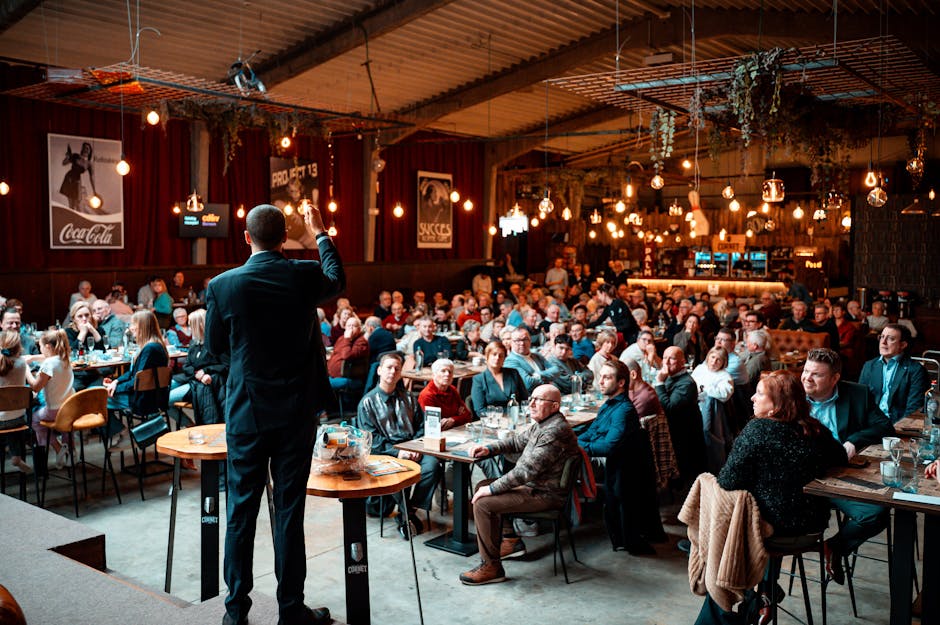
Key Takeaways:
- The “invisible expert” problem is a visibility gap, not a knowledge gap, and it’s solvable as a skill, not a personality trait.
- Live coaching with real-time feedback produces faster, deeper change than recorded courses, because speaking habits only shift under pressure.
- A structured two-week sprint combining mindset work, the V.O.I.C.E. System, and in-the-moment coaching can close the gap between what experts know and how they’re heard.
Brilliant professionals often stay invisible in their own organizations and watch less-qualified colleagues claim the opportunities they deserve. It’s a strange, quiet kind of career pain: you know more than the person getting promoted, you prepared more thoroughly than the colleague now speaking at the front of the room, and still you’re the one nobody quotes back.
The frustrating truth is that this isn’t a knowledge gap. It’s a visibility gap. And the solution isn’t “more preparation.” It’s learning how to be heard when it actually matters.
This is the problem Elizabeth C. Miller, Speaking Confidence Coach at talkwithecm, has worked on for more than two decades, with professionals from more than 15 nations. Her diagnosis is simple: most professionals were never taught how to communicate their expertise. They absorbed habits from colleagues who weren’t strong communicators either, and those habits harden under pressure.
Why brilliant experts go invisible
Most professionals learned to present by watching other presenters, often ones who were themselves winging it. The patterns get copied forward: overloaded slides, rushed delivery, information dumps that prioritize coverage over connection. When the stakes go up, so does the instinct to cram in more detail. The result is presentations that demonstrate knowledge but don’t land.
Fear compounds this. Many professionals can describe exactly how they’d like to speak: more slowly, with stories, with more emotion, with the courage to make a point and stop. They rehearse that version in their head. Then the meeting starts, the pressure hits, and they stay quiet. “Next time,” they think. But without something new to interrupt the pattern, next time looks exactly the same.
Imposter syndrome makes the loop tighter. The more expert you actually are, the more you notice the gap between what you know and what you manage to say, and the more you fear being exposed as less polished than you are knowledgeable.
Why live coaching works where courses don’t
Recorded courses teach concepts. That’s useful, but it’s not where the problem lives. The problem lives in the moment: the exact second when the room falls quiet and it’s your turn to speak. What has to change is what happens in that moment, and that can only be trained in that moment.
This is the idea behind Co-Presence, talkwithecm’s signature method: Elizabeth coaches live, in the moment, rather than leaving participants to apply lessons on their own afterwards. When you stumble over a sentence in a hot seat, the correction lands while your nervous system is still in the state that produced the stumble. That’s where lasting habit change happens. Not later, in your notes, when the pressure is gone.
Three reinforcing mechanisms make intensive live coaching work:
- Concentrated practice builds confidence fast. Short bursts of repeated live practice create the repetitions that slow weekly programs rarely deliver. Each successful attempt stacks on the last before doubt has a chance to reassert itself.
- Real-time feedback catches the things you can’t see. You can’t coach yourself out of a vocal habit you don’t know you have. A coach watching live hears it, names it, and has you try again in the next sentence. Weeks of practicing a bad habit turn into two minutes of practicing a new one.
- Group dynamics create borrowed confidence. Watching a peer you respect struggle with the same thing you struggle with, and then break through, does more than any solo exercise. Group settings normalize the struggle and let participants draw on each other’s courage.
What two weeks of focused work actually changes
The “Invisible to Irresistible: 2 Weeks to Find Your Voice” bootcamp is built around five live sessions, office hours, and a Hot Seats finale. Each layer targets a specific part of the problem.
Mindset. The first work is on the beliefs that keep experts quiet. Participants examine the stories they’ve been telling themselves about their speaking and learn to separate “I’m not a natural speaker” from “I’ve never been coached in the moment.”
The V.O.I.C.E. System. talkwithecm’s methodology, named for its five dimensions: Volume and Variation, Orchestration of Pace, Intentional Pauses, Contrast and Emphasis, Emotion and Energy. Each dimension is a trainable skill, not a personality trait. Participants learn where their current default sits on each dimension and what a deliberate version sounds like.
Story. Information dumps get forgotten; stories get remembered. Participants learn to structure the specific anecdotes they already have (the projects, the clients, the moments of doubt) into short, vivid illustrations that carry a point without requiring ten slides of context.
Presence. Authority doesn’t come from volume. It comes from the willingness to pause, to let a point land, to meet the room instead of performing at it. These are precise adjustments with large effects, and they’re almost impossible to self-correct.
Live practice. The bootcamp ends with Hot Seats: participants present in front of the group and receive in-the-moment coaching. This is the part that looks the most vulnerable and produces the most change. It’s where everything from the previous two weeks gets stress-tested.
The point of a two-week sprint
Two weeks sounds short, and in one sense it is. Nobody becomes a different speaker in fourteen days. But what two weeks of concentrated, live coaching can do is something different and arguably more valuable: it can break the loop. It can give an expert a handful of successful experiences of being heard, under pressure, with a coach present. Those experiences are what make “next time” actually look different.
The goal isn’t to turn quiet experts into performers. It’s to make sure the people with the most to say are no longer the ones nobody hears.
Elizabeth runs the bootcamp several times a year and announces each new cohort inside The Irresistible Academy, her free community, where she also hosts live workshops. You can join it here: skool.com/talkwithecm/about.
talkwithecm
18 Straußengasse
Wien
Wien
1050
Austria


